Ribbon Cutting Celebration Held at New Autism Learning Center in Grand Rapids, MI

Total Spectrum welcomes families to their new location.

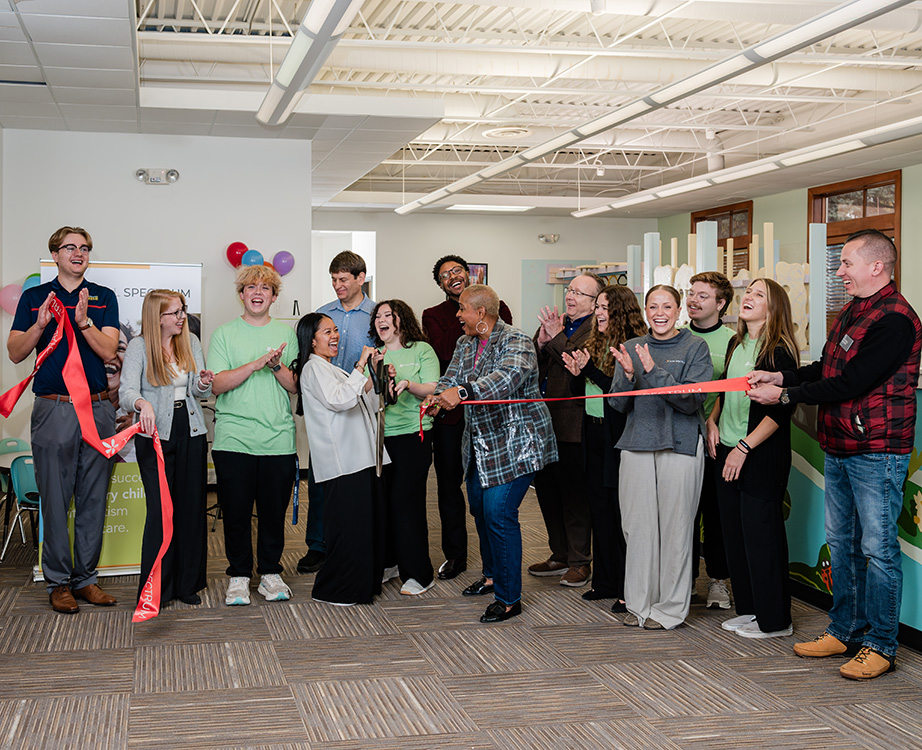
Total Spectrum, a provider of LEARN Behavioral, is proud to open its doors with a ribbon-cutting celebration at its new Grand Rapids Learning Center at 1550 Leonard St NE, Grand Rapids, Michigan 49505.

The ribbon-cutting celebration was hosted by the Grand Rapids Chamber of Commerce and held on November 5, 2026.

During the ribbon-cutting ceremony, Todd Anderson, Membership Engagement Manager of the Grand Rapids Chamber of Commerce, shared greetings. Mayor David LaGrand and City Commissioners Lisa Knight and Marshall Kilgore shared remarks. Members of the Grand Rapids Chamber of Commerce and other guests were in attendance.

Ribbon-cutting attendees were able to tour the facility, enjoy light refreshments, and meet Total Spectrum’s leadership team, Melissa Furman, MA, BCBA, LBA, Regional Clinical Director, and Trisha Johnson, MA, BCBA, Senior Regional Director.

“Total Spectrum is excited to bring compassionate, high-quality ABA therapy to families in the greater Grand Rapids area,” said Melissa Furman, Regional Clinical Director. “We tailor our services to each child and family, providing engaging, evidence-based care in an environment designed to help children build skills, confidence, and independence.”

Total Spectrum is Michigan’s premiere contemporary applied behavior analysis (ABA) provider of center-based autism services for children and young adults ages 2-21 years. The new Grand Rapids Learning Center provides Early Intervention, center-based ABA therapy, Launchpad Learning – a school readiness program, Social Skills Programming, and parent education. The Grand Rapids team also offers ABA therapy in the home and community settings. 

There is no waitlist for clients before 4 pm, and after-school and weekend services are provided to accommodate busy family schedules. The Grand Rapids Learning Center is conveniently located and easily accessible to families in the region via I-196 and Route 131.

The center is now enrolling new clients in Kent County and beyond.

Left to right: Billy Speyer; Regional Clinical Director Melissa Furman; Christopher Killgore; Rebecca Sanvictores; Mayor David LaGrand; Jill Jones; City Commissioner Marshall Kilgore; City Commissioner Lisa Knight; Todd Anderson; Kaleigh Heer; Sarah Cabala; Josh Auten; Liz Opiela; Mitchell Magoon.

Open House December 3

Families are invited to a sensory-friendly Open House and Winter Wonderland on December 3, 2026, from 4 pm to 6 pm. This event will feature an opportunity to meet the team, along with sensory-friendly winter-themed activities for guests to enjoy in a welcoming, inclusive environment.

About Total Spectrum

Total Spectrum is part of the LEARN Behavioral network, one of the nation’s leading providers of contemporary ABA therapy. Total Spectrum has been delivering evidence-based services for more than 10 years, helping children and young adults with autism find success and reach their unique potential.

For more information or to enroll a child at the new Grand Rapids Learning Center, call (844) 263-1613 or visit https://totalspectrumcare.com/locations/grand-rapids

About LEARN Behavioral

LEARN Behavioral is a national leader in autism care, offering comprehensive diagnostic services and contemporary applied behavior analysis (ABA) therapy for children with autism spectrum disorder (ASD). With a nationwide network of ABA providers and more than 150 Learning Centers across the country, LEARN delivers the highest standard of evidence-based care—customized to meet the unique needs and interests of each child and family. For more information, visit learnbehavioral.com.

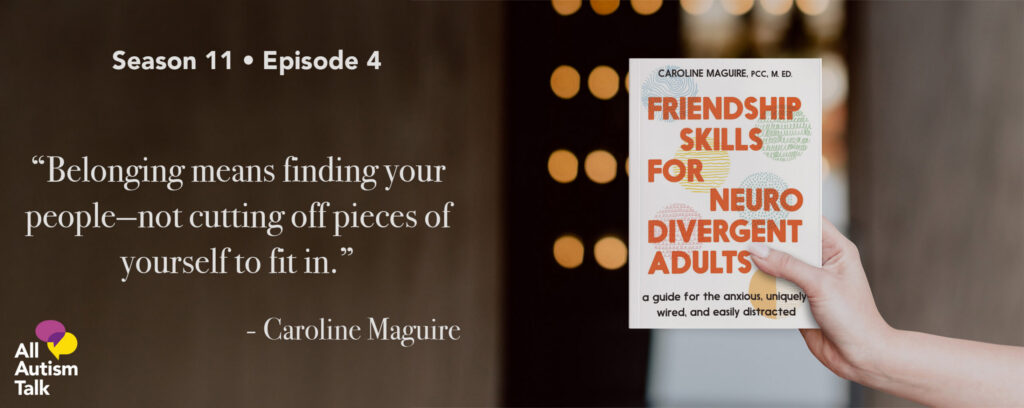
Friendship Skills for Neurodivergent Adults

In this episode, Caroline Maguire explores the nuances of friendship through a neurodivergent lens, drawing from her book Friendship Skills for Neurodivergent Adults. She shares personal insights on social challenges, the difference between belonging and popularity, and the impact of masking and mismatched communication styles. Caroline introduces her “Three P’s” of friendship—Proximity, Practice, and Participation—as a framework for building meaningful connections, while also unpacking how friendships can evolve, from seasonal to lifelong. This conversation offers practical guidance, research-backed insights, and an empowering reminder to honor your own unique path to connection.

View the transcript, show notes, and previous episodes at: https://www.allautismtalk.com/episodes/friendship-skills-for-neurodivergent-adults

All Autism Talk is sponsored by LEARN Behavioral.

The Autism Diagnosis Process: What to Expect

When it comes to parenting, the unknown can be one of the hardest parts. Worries creep in if you suspect something’s wrong with your child’s development. If you think your child may be showing signs of autism, there’s no guidebook to tell you what to do next.

It’s natural to feel overwhelmed. The process gets easier when you know what to expect.

If you’ve found your way to this post, you’ve likely taken the first step: questioning whether your child shows signs of autism.

Recognizing this possibility is a significant and sometimes challenging move. Rest assured, you’re not alone. This guide is here to provide you with valuable insights and support as you navigate through this process.

Understanding Autism

Autism spectrum disorder (ASD) affects how a person interacts, learns, and behaves. Everyone on the spectrum is different. Signs of autism usually start showing up when a child is very young.

Recognizing the Symptoms

Autism symptoms can be different for everyone. If your child is not growing or learning like other kids their age, or if they have any of the following signs, you might want to talk to your pediatrician:

  • Not smiling at others by six months
  • Not gesturing or pointing to communicate by 12 months
  • Not babbling by 12 months
  • Not using single words like “no,” “mama,” “dada” by 16 months
  • Not using two-word phrases like “want cup,” “go play” by 24 months
  • Not responding to sounds, voices, or their own name by three years
  • Poor eye contact by three years
  • Little interest in other children or caretakers by three years
  • Losing skills they once had at any point by three years

The Diagnosis Process

Getting a diagnosis of autism starts with an evaluation. Experts will examine how a child behaves and will look at their past development. If your child’s pediatrician thinks it might be autism, they’ll send your child to an expert for a closer look. This process includes:

  • A parent interview
  • Review of medical, psychological, and school records
  • Assessment of cognitive, developmental, and adaptive functioning skills
  • Observation of your child during play

What Happens Next?

After an autism evaluation, our team of specialists will review and interpret the results. If your child is diagnosed with autism, our team will work with you to create a personalized treatment plan. This plan includes therapies to help improve communication, social skills, and behavior.

At LEARN, we work with families on a plan tailored to your family’s needs. We will adjust the treatment plan as needed. We’ll also provide you with resources and support.

Whether you’re just noticing signs or you’re already deep into the diagnosis process, our team is here to help. We know that recognizing and diagnosing autism can be challenging. But with the right support and guidance, you can navigate it confidently.

Myth: Autistic People Lack Empathy

Katherine Johnson. M.S., BCBA
Senior Director of Partnerships, LEARN Behavioral

Note: This article is about a form of ableism that affects one part of the autistic community: autistic people who are proficient verbal communicators. Those who communicate with AAC devices, typing, sign, or who don’t yet have the communication skills to engage with the wider world face other forms of ableism and discrimination not described in this article. 

The Double Empathy Problem

Remember the game “telephone”? One person whispers a message to another, that person whispers to the next, and on down the line until the last person announces the message so everyone can laugh at how many times the original sentence has been distorted. 

Using a variation of this exercise, a study looked at how a message fared if the string of people in the telephone line were all autistic, all neurotypical, or a mix of both. It turns out that the rate at which the message degraded among the verbal autistic people was no greater than that of the neurotypical people.  It was only when the message was sent through a mix of autistic and neurotypical people that the meaning deteriorated significantly faster. 

What does this tell us? 

If effective social communication was objectively deficient (not just different) in verbal autistic people, we would expect that the all-autistic string of people would produce the worst decline in messages in the study; that wasn’t the finding. Instead, the autistic people received and passed along messages amongst themselves just as well as the neurotypical people. The faulty communication resulted not from the autistic participants but from the mismatch between autistic and neurotypical communication.  

This small study illustrates a theory by Dr. Damian Milton that he calls the “double empathy problem.” Challenging the assumption that neurotypical people have social skills that autistic people simply lack, he posits that the disconnects between autistic and non-autistic people are not the result of a one-sided skill deficit; they are instead a mismatch of neurotypes.

Reframing

This is a dramatic reframing of the common belief about these communication breakdowns, which placed the fault squarely on the social skill profile of the autistic folks. The “empathy” part of the theory’s name refers to the widely-held idea that autistic people lack empathy, when the theory would suggest that autistic empathy is simply expressed differently. Slowly but surely, researchers are beginning to look at that other side of the coin: how the social skill profiles of neurotypical people might also undermine relationships.   

For years, research has demonstrated that autistic people have difficulty interpreting facial expressions; a 2016 study finally looked at the reverse. They asked neurotypical people to interpret facial expressions of autistic folks – and they were unable to do it. The results of a series of studies in 2017 suggest that one reason people of different neurotypes have difficulty connecting is because neurotypical people form negative first impressions of autistic people (based upon appearance, not conversational skills), and subsequently avoid them. This indicates that some of the social isolation that autistic people face is due to ableism and discrimination.  

Missing Out

The difficulties autistic and non-autistic people have connecting negatively impact both sides. Since autistic people are in the minority, disconnection from the neurotypical portion of their community can increase their feelings of loneliness and isolation. For its part, the neurotypical world is missing out on the unique, often innovative, autistic perspective. 

Autistic people who have had huge cultural impacts on our society (environmental activist Greta Thunberg, actor Dan Akroyd, and Pokemon creator Santoshi Tajiri, to name a few) have had success in spite of a society that is largely unsupportive of and, at times, openly hostile to, the social profile of autistic folks. Imagine what brilliance we miss out on when autistic people are looked over, avoided, not hired, etc.  

Even those who are not destined to become one of the famous few mentioned above have a perspective that can deeply impact those around them. Autistic people see the world from different angles, which can be an advantage in everyday problem-solving. They generally have a strong sense of justice, an unwillingness to be cowed by hierarchy, and a drive for honesty, sincerity, and specificity, all beneficial qualities in social relationships and the workplace.

Expanding Neurotypical Empathy

The solution to the separation between people of different neurotypes has largely been to teach autistic people how to understand the rest of the world better. But by considering the double-empathy problem, we can see that this is only part of the issue. The other part is that non-autistic people also have skill deficits: interpreting and interacting with autistic people. 

Just as history is written by the winners, social norms are written by the majority. If we want to work toward a future where people of all neurotypes better understand one another, we must listen to the experiences of the minority. It’s important to recognize that neurotypical “social norms” exist because they’re most common, not because they are inherently superior. These dominant “social norms” directly result from how neurotypical people think, behave, and process the world. 

“Empathy” is about understanding another person’s experience. Ironically, to succeed in our society, autistic people must display empathy nearly constantly: decoding others’ unwritten rules and learning to approach the world in a way that works for others. To bridge the divide, nurture the gifts of the autistic people in our society, and for everyone to benefit from the valuable perspectives of the neurodivergent, those with neurotypical brains must follow this example. By challenging themselves to work toward understanding and adapting to the way autistic people see and experience the world, neurotypical folks can open themselves up to new friends with an intense devotion to honesty. Employers will find innovative autistic employees with rare specializations and a knack for accuracy. And society will benefit from recognizing and celebrating the valuable and previously underappreciated gifts of the autistic mind. 

Damian E.M. Milton (2012) On the ontological status of autism: the ‘double empathy problem’, Disability & Society, 27:6, 883-887, DOI: 10.1080/09687599.2012.710008

Sheppard, E., Pillai, D., Wong, G.TL. et al. How Easy is it to Read the Minds of People with Autism Spectrum Disorder?. J Autism Dev Disord 46, 1247–1254 (2016). https://doi.org/10.1007/s10803-015-2662-8

Sasson, N., Faso, D., Nugent, J. et al. Neurotypical Peers are Less Willing to Interact with Those with Autism based on Thin Slice Judgments. Sci Rep 7, 40700 (2017). https://doi.org/10.1038/srep40700

Building Social Skills During Summer

School is out! Let summer break be a great opportunity to continue your child’s learning and growth.

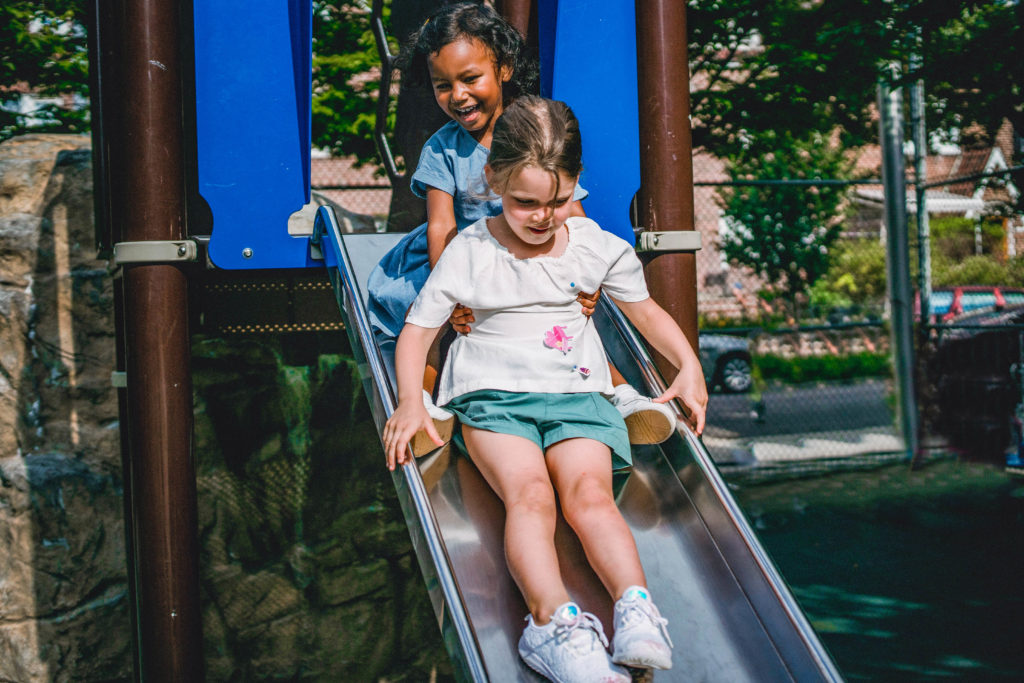
While summer can bring parents a welcome relief from making lunches and school drop-off and pick-up, it also offers time for kids to build valuable skills. Social skills programs are offered in several cities by different service providers and can offer a structured, play-based environment for children to build essential social, communication, cognitive, and sensory skills. Kids have fun and make friends as they learn while maintaining a helpful routine for themselves and their parents.

Many skill-boosting summer programs take place in group settings that are similar to the school environment, while still providing one-to-one support. These specialized programs promote collaboration and inclusion of peers and some welcome siblings, too.

Make Friends

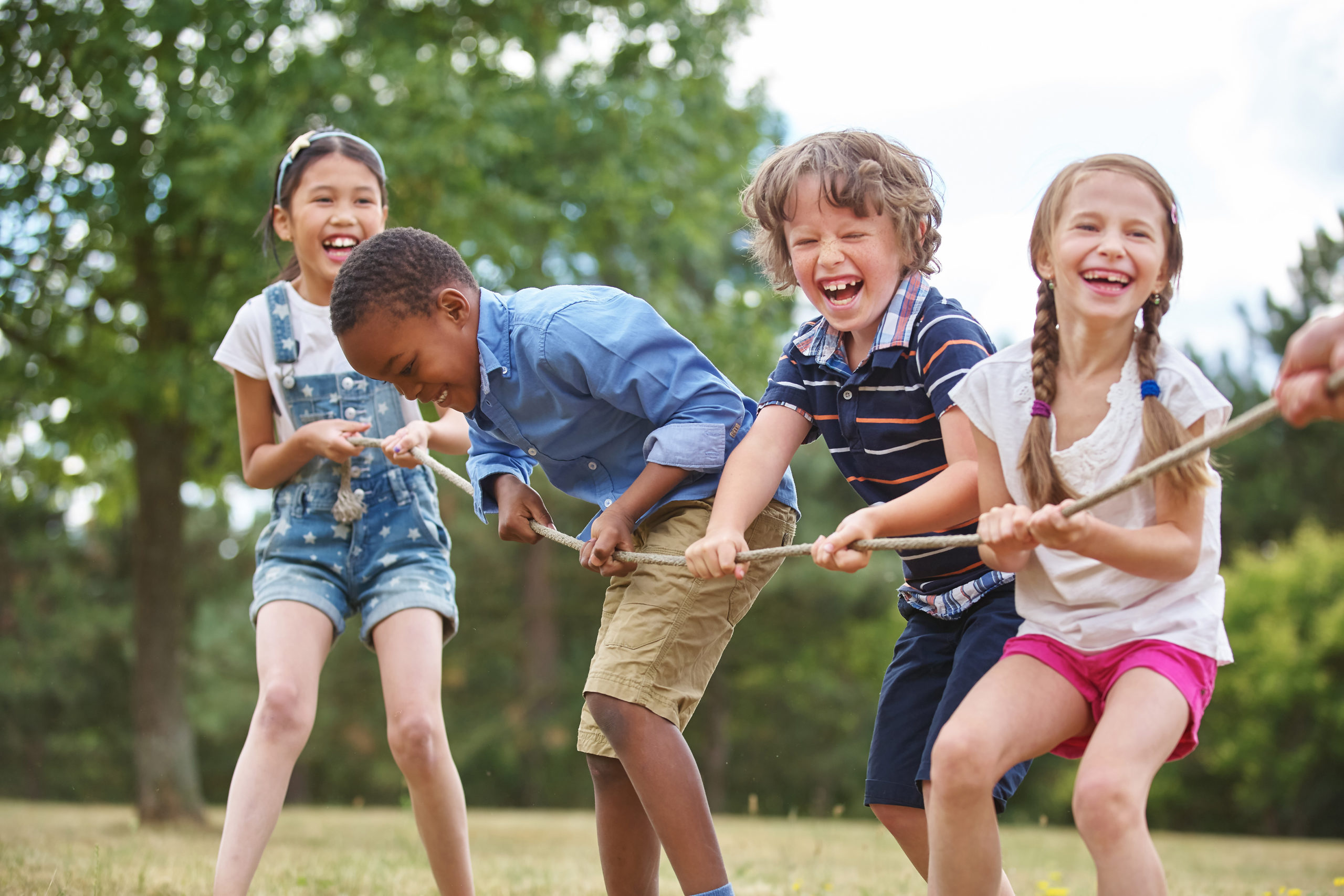
Social skills programs provide activities that encourage and reward the building of social relationships rather than individual play. Children are grouped with other kids of the same age group and skill level, enabling them to share in age-appropriate games, activities, and communication. Groups are led by highly-trained staff, known as behavior technicians (BTs), who are overseen by behavior analysts. BTs encourage kids to get out of their comfort zone and try new things.

Stay Mentally and Physically Active

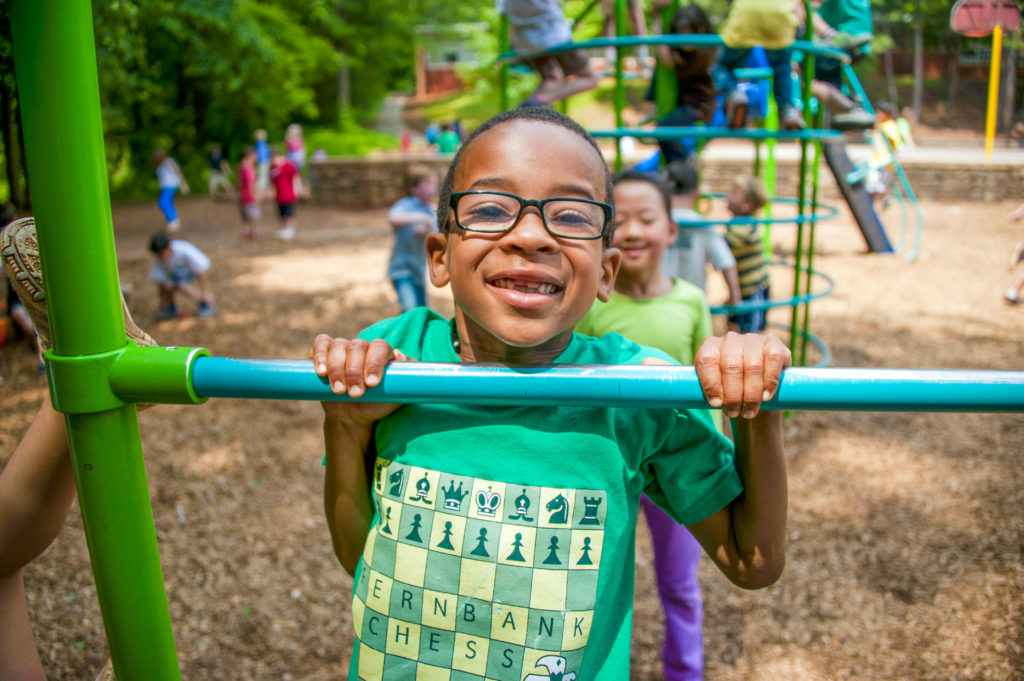
School breaks can impact children academically. The “summer slide” as it is called, refers to a loss of learning that students experience during the summer months. Social skills programs can help children stay mentally and physically active. While promoting positive behaviors and peer interaction, physical activity is suggested to improve self-esteem and general levels of happiness.

Improve Motor Skills

Engaging in physical play and teamwork exercises can also support overall motor skills, which support many everyday activities. This can help children feel more confident and capable.

Behavior Management

By consistently promoting positive behaviors and language, a child can learn what they can do rather than what they cannot do. Social skills programs offer valuable learning opportunities for kids to communicate their needs and engage in behaviors that help them in daily activities and in different environments.

Click here for other summer-themed blogs to support your family this season.